![[年頭の言葉]会長になって初の新年 日本会議を思う(谷口 智彦)[日本語・英語版]](/images/main/opinion.jpg)
![[年頭の言葉]会長になって初の新年 日本会議を思う(谷口 智彦)[日本語・英語版]](/images/hx/h1-opinion.gif)
[年頭の言葉]会長になって初の新年 日本会議を思う(谷口 智彦)[日本語・英語版]
[年頭の言葉]会長になって初の新年 日本会議を思う
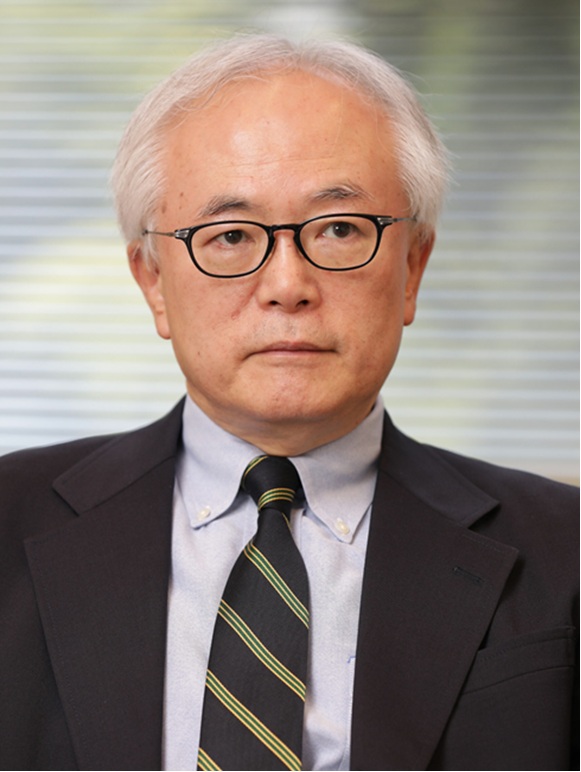
日本会議会長 谷口 智彦
※[英訳版を日本版の下に続いて掲載しています。
■明治記念館――。
私が最初に言ったのは
明治記念館の一室で日本会議会長になるよう依頼を受けた時は、びっくりしました。
「私なんかよりもっと知名度の高い方かたの方がよくはありませんか」と申しました。「大きな組織を長として率いた経験だってありませんよ」とも。
この二点目については少々。
東京大学法学部を私の年、昭和56(1981)年に出た者は大体、大手企業、金融機関、中央官庁に進むか、法曹になるかしたものでしたが、わたしはそれらがみなイヤでした。
昭和51年、大学1年生の秋から、佐藤勝巳という人の小さな研究所兼雑誌社へ、無償で手伝いに行っていました。
雑誌づくりは性に合っていました。自分における徹夜の才に気づいたのはこの頃です。
5年かかって卒業にこぎつけるまでには一応戦力化していたものですから、居残って専従になってくれと請われるまま、私は就職活動など一切せずその道を選び、ごく機嫌良く、そこへ「就職」したのです。
同じ佐藤氏が、新潟で講演した際に横田めぐみさんのことを初めて知るのは大分後のこと。そのときには、私はもう別の仕事(『日経ビジネス』記者)をしていました。
以来いくつも職場を変えた私は振り返って思うに、よほど辛抱のきかない人間でした。
ひとつところにじっとしていられない性分、飽きっぽい性格だったと、認めるよりありません。だったら日本会議もすぐ飽きてしまうのかと訝(いぶか)られた方、ご心配無用です。すぐあとに、覚悟を書きます。
■組織の長、管理職としての経験は皆無。それでも―
好きなこと、得意か、少なくとも不得手ではないこと、やっていて苦にならないか楽しいことしか、してこなかったと言ってもかまいません。
例えば上司に誘われて呑めない酒を付き合う、休日は仕事絡みのゴルフに行くといった、多くの人が難なくこなし苦にしないことをわたしはしませんでした。いえ、できませんでした。
でも注釈を加えておくと、YOASOBIでもSEKAINOOWARIでも、中島みゆきや石川さゆり、布施明でも、歌うのは好きです。お酒抜きで、いつでも可の状態です。
好きなことしかしない人生のどの時点でも、組織の長、管理職として過ごす経験とは無縁できてしまいました。外務省で、安倍晋三総理官邸で、いずれも幹部の一翼を担ったとはいえ、外相や首相を支えるスタッフであっても、自らリーダーだったのではありませんでした。
「そんな人間なんですよ、それでもいいんですか」と、わたしは申し上げました。とはいえ言いつつすでに、「これは自分に訪れた大きな運命だ」と、内心の声は聞こえていたのです。
その夜、日付が変わってすぐでした。生々しい現実感を伴って安倍総理が夢に現れ、「あ、それはね、とっても大切な役目ですからね、谷口さん、ぜひ受けるといいですよ」と言ったということ、奇(く)しくもそれはわたし自身の誕生日で、故総理の享年をとうとう上回ってしまったその瞬間だったということは、いつぞや本誌に「就任の弁」として書きました。
かくして皆様は、さして知名度があるでなし、組織人としてはついに未成熟のワタクシに、会長のかんむりというか、シャッポ(帽子)をかぶせておしまいには、あいなりぬ。
ここからは、かんむり=帽子のかぶり心地の話になります。
■会長の「帽子」をかぶる覚悟と決意
第一に、かんむりと申したのは言葉の綾で、これは皆様ご承知のとおり金かね目め のものではありません。浄財を元につつましく生きている組織にいかにも似つかわしいものです。そこで以後は帽子で通します。
第二に、だからといって、少々の風で吹き飛ばされる類いの軽いものではない。それどころか大変重いものだということを実感しつつあるところです。
前任の田久保忠衛さんもそうでしたけれど、私が帽子を脱ぐとしたら、最後の息を引き取るときのことでしょう。
死とは私にとってどこまでも私事であって、他者の介在を許したくないなにものかでした。その点に潔癖を維持したいと思っていましたが、もうそうはいかないようです。仮に死期を悟って事前にお役目を返上していたとしても、日本会議会長だった事実は残る。このことに少しこう、ずっしりと、重いものを感じています。感じは、消えずに残ると思います。
帽子のかぶり心地について三つ目の、そして最後の感想を申しますと、皆様は誰かがこの帽子をかぶって世間に押し出てくれるのを待っておられたということです。そのことに、随所で気づかされつつあります。
ですからこれは自分がかぶっている帽子ではあるけれども、皆さんにとって必要な帽子だったのだと悟り、しっかりかぶっていかなきゃならんぞと自覚を促されつつあるわけです。
ではどうして、日本会議会長の新たな登場が待ち望まれていたのでしょうか。待望されていたという私の観察において間違いがなければ、それはどうしてだったのでしょうか。
■驚くことに事欠かない本会の真姿
思いますにそれは、日本会議の活動を支え、担っている一人ひとりが、金銭的報酬と無縁、世間的名望とも関わりがなく、直接の見返りといって特段なにもないそんな時間と手間ばかりかかる活動に、身をささげてきたことの裏返しでしょう。
会長になって以来、驚くことに事欠きません。例えば両陛下の行幸をお迎えしようと沿道に並ぶたくさんの人たち、老若男女に日の丸の小旗を手渡したり、陛下の車列が近づいたのを知らせる手伝いをするのは、多くの場合に、日本会議の皆さんだったとは。
それからこれは学生時代から見知っている西岡力さんに直接言われたことですが、拉致被害者を救う活動で各地に出向き集会をする、街頭で署名を集めるといった大衆行動をする際、必ずといってよいほど日本会議の世話になってきたのだと。
同活動を長年ひっぱってきた西岡さんいわく、「日本会議がないと何もできなかったのに、そのことをひけらかしたりするというところが日本会議のメンバーには全然ない。ホントにエライ人たちなんです」。
私はなるほどと思いました。無名にして無私の活動にまるで祈りを──日本よ良い国なれかしという祈りをこめるようにしてたずさわりながら、その自分たちの活動を会長として代表する人が不在のままであるということに寂しいような、時として割り切れない思いを抱く方があったに違いない、だからこそ、私ごとき者でも、その会長就任をことのほか喜んでくれるのだと、そう感得したのです。
■現代の「尊皇」の集団としての私たちは
私たちは天皇さまと、そのご一家を大切に思う集団です。
その一点で人後に落ちないという自覚・誇りをもっている。
ですから幕末の用語を用いるなら、尊皇の集団です。
けれども自分たちは何々主義者であると漢語で規定することに、私はためらいを覚えます。幕末における「尊皇」とは、「佐幕」、つまり徳川幕府を守る立場に反対する主義のことでした。政治的対立の、遂には流血の対決に至る力学における言葉だったわけです。
それでなくても、漢語を用いると、何かこう、肩をそびやかすような、まなじりを決するような悲壮感が漂います。それに自分で酔いしれてしまうと、これは「小児病」の類いです。
尊皇の思いにおいて人後に落ちない私たちは、目をつり上げるより頬を緩め、悲壮になるよりも楽天的でいられる、いつも心にゆとりのある人間たちでいたいと思うものですが、皆さまはいかが思われますか。そうした快活さが、また天皇ご一家はじめ皇族のみなさまのものでもあってほしいと、それが私たちの願いでもあるわけです。
■覚悟と信念を持つ堅固で快活な集まりを信条に
この先の20年が、わが国にとって伸(の)るか反(そ)るかの時期です。
2049年、共産チャイナは創建百周年を迎えます。習近平は96歳になる年です。できればそれまで生きて、かつまた健康で、おのれ自身の手で国家的祝賀を取り仕切りたいと熱望していることでしょう。
自国を世界一に押し上げるという習近平のいわゆる「チャイナ・ドリーム」は、台湾をわがものにしない限り画(が)餅(べい)に帰します。この先いろんなことに目鼻がつく2045年ごろまでが、つまり向後20年こそは、チャイナが身もだえし、あたり構わず力を振り回して、なにがなんでも台湾を併呑したいと大勝負に出る時期です。
だからこそ私たち日本会議に集う者は、覚悟と信念の堅固な集まりでなくてはならない。しかしそれでもなお、心にゆとりをなくすことなく、快活を信条として進んでいくべきだと思うのです。悲観主義の集団になんかなってなるものか、です。
■日本会議の旗は世界が信奉する旗に
日本はどこからどう見ても、世界の中で比較を絶して長い伝統をもつ国だからで、そのことに思い及んで日本に生まれて良かったと思えるなら、悲観主義は私たちに似合わないことが納得できるからです。
世界を見回しても、日本には堅固な同盟相手があれば心からわかりあえる友邦がいて、いつでも助けに来てくれる仲間がいます。東日本大震災のあと世界が寄せてくれた同情は、人類史に特筆される規模でした。
それにひきかえチャイナは可哀想です。恐がっておべんちゃらを言う国はたくさんあるけれど、仲間と呼べる国、ましてや同盟相手の国はひとつとしてありません。習近平またしかり。心を許せる同輩を一人としてもたない世界一孤独な人です。
ですから私たちは自信をもっていい。さらにいうなら、多様性から一体性へ、グローバリズムからアイデンティティへ、世界の思潮はここ数年で大きく変わりました。日本会議が半世紀掲げてきた旗は、世界の多くで信奉される旗となったのですから、慶賀すべきです。
■50年力を合わせてきた団体の皆様と共に
今年は9月、日本を守る会結成50周年と日本会議設立30周年をそれぞれ1年ずつ後ろ倒し、前倒しして祝う一大イベントを予定しています。一口に50年といいますが、発足の頃からずっと担ってきたあの方、そしてこの方、また共に力を合わせてきた団体の皆さまのお顔を少しは具体的に思い起こせるようになったいま、ひたすら敬服の念がわいてまいります。
この先50年を展望する年ともしようと、おのずと総意ができてきました。このあたりは、継続と伝統をもって尊しとする日本会議の底を流れる信条がよく表れたところだと思います。
今年18歳を迎えて有権者となる若者は、50年どころか80年はゆうに生き、22世紀を見届ける人たちです。皇統をいま、本当に安定的なものとして、22世紀の日本にあっても、今までと同様、日本を日本たらしめてくれる存在でいてくださるよう、私たちの努力が必要です。
■元旦の計―今から50年後の日本を、世界を展望して
今から50年後の2070年代半ばまでには、天皇陛下となられた悠仁さまのご一家に健やかな男児が幾人かおられ、また旧男性皇族で皇室にお入りになった方がそれぞれの宮家で幾人かやはり男児をもうけられ、悠久の皇統の、そのまた先行きに不安のなくなっていることを望みます。皇室のみなさまは、祖霊を敬まって歌をよまれ、長い伝統を受け継いでいこうとなさっておいでのことでしょう。
チャイナの行く末は神のみぞ知る。でもインドはチャイナをしのぐ大国となって、それでも日本と心の紐を維持し、困ったときに助け合う関係を保っています。アメリカまたしかり。アメリカは陰の極まで落ちたら、また大きく上昇する国です。日米同盟にもとづいて、アメリカしっかりせいと言いましょう。
そして日本は、君が代を歌うにも日の丸を掲げるにも、妙な衒(てら)いやためらいがない国にきっとなっています。いえ、私たちの力で、そんな国にしていきたいものです。元旦の計でした。
― 英語版 ―――――――
Wearing the Hat: A New Year’s Reflection from Nippon Kaigi
Tomohiko Taniguchi
On assuming a role never sought, the meaning of quiet civic devotion, and why cheerfulness—not pessimism—should guide Japan in an age of strategic pressure.
When I was asked to wear the hat of chairman, I hesitated—not because the role lacked importance, but because I had never imagined myself as its bearer. Yet some responsibilities are not chosen; they are entrusted. In reflecting on my first New Year in this position, I have come to see the hat not as a symbol of authority, but as one of service—shaped by tradition, sustained by volunteers, and heavy with expectation.
When I was asked, in a room at the Meiji Kinenkan, to assume the position of Chairman of Nippon Kaigi, I was genuinely taken aback. “Would it not be better,” I replied, “to ask someone far better known than myself?” I also added, “I have never led a large organisation as its head.”
As to the second point, a word of explanation.
Those who graduated from the Faculty of Law at the University of Tokyo in my cohort—1981—generally went on to join major corporations, financial institutions, central government ministries, or the legal profession. I found none of those paths appealing.
Beginning in the autumn of my first year at university, in 1976, I worked without pay at a small research institute and magazine publisher run by a man named SATO Katsumi. Being a magazine editor suited me well. It was during that period that I discovered I had a certain talent for working through the night.
By the time I finally managed to graduate—after five years—I had become a fairly experienced editor. When I was asked to remain on as a full-time staff member, I chose that path without hesitation, made no attempt whatsoever at job-hunting, and cheerfully took up what could, if one stretched the definition, be called “employment”.
It was much later that Mr SATO, whilst delivering a speech in Niigata, discovered the case of YOKOTA Megumi, the girl North Korea had abducted when she was only thirteen. By then, I had already moved on to another job, as a reporter for Nikkei Business.
Looking back now, having changed workplaces many times since, I must admit that I was not a man given to staying put. I lacked the temperament to remain settled in one place for long, and had a disposition that tired easily of routine.
If anyone therefore wondered whether I might soon tire of Nippon Kaigi as well, there is no need for concern. I shall explain why shortly.
It would not be an exaggeration to say that I have done only what I liked, what I was good at—or at least not poor at—and what I found neither painful nor burdensome, but genuinely enjoyable.
For example, I did not—indeed, could not—do things that many people accept without complaint: accompanying one’s superior to drink alcohol one cannot stomach, or spending weekends on work-related golf outings.
By way of annotation, however: whether it be YOASOBI or SEKAI NO OWARI, or NAKAJIMA Miyuki, ISHIKAWA Sayuri, or FUSE Akira, I do enjoy singing. Alcohol is entirely unnecessary; I am always ready.
At no point in a life devoted to doing only what I liked did I acquire experience as the head of an organisation or as a managerial figure. Even though I served as part of the senior ranks at the Ministry of Foreign Affairs and later at Prime Minister ABE Shinzo’s Office, I was always a member of the staff supporting the foreign minister or the prime minister—not a leader in my own right.
“This is the sort of person I am,” I said. “Is that truly acceptable?” Yet even as I spoke those words, I could already hear an inner voice telling me: this is a great destiny that has come to you.
That very night, just after the date changed, Prime Minister ABE appeared in my dream with vivid immediacy and said, “Ah, that is an exceedingly important role, TANIGUCHI-san. You should certainly accept it.”
As I wrote elsewhere, this moment coincided—uncannily—with my birthday, and with the instant at which I finally surpassed the late Prime Minister’s age at death.
And thus it came to pass that you placed upon the head of a man neither widely known nor fully formed as an organisational leader the crown—or perhaps the hat—of Chairman.
From here on, I shall speak of how that hat feels when worn.
First, when I say “crown,” this is merely a turn of phrase. As you all know, it is not an object of material value. It is fitting for an organisation sustained by modest, voluntary contributions and membership fees, freely given. Henceforth, I shall call it a hat.
Second, that does not mean it is light enough to be blown away by a passing breeze. On the contrary, I have come to realise that it is very heavy indeed.
Like my predecessor, TAKUBO Tadae, I expect to remove this hat only when I draw my final breath.
Death, to me, had always been an entirely private matter—something into which I wished no one else to intrude. I had hoped to preserve that sense of purity. But it seems that is no longer possible. Even if I were to foresee my death and relinquish my duties in advance, the fact that I served as Chairman of Nippon Kaigi would remain. That reality sits heavily with me, and I believe that sense of weight will not fade.
My third and final observation on the feel of this hat is this: many of you had been waiting for someone—anyone—to wear it and step forward into public view. I have been made aware of this time and again.
I have come to realise, therefore, that while it is a hat I wear, it is one you needed. And so I find myself repeatedly reminding myself that I must wear it firmly and without hesitation.
Why, then, was the appearance of a new Chairman of Nippon Kaigi so eagerly awaited? If my observation is correct, what lay behind that expectation?
I believe it reflects the fact that each and every person who supports and sustains Nippon Kaigi has devoted themselves to activities that bring neither financial reward nor public recognition—activities that demand time and effort, yet offer no tangible return.
Since assuming the chairmanship, I have had no shortage of finding something new. For instance, I finally understood who it was that lined the streets to welcome Their Majesties’ visits: the many people, young and old, who hand out small Hinomaru flags along the roadside, or help alert those waiting when the Imperial motorcade is approaching—more often than not, it was members of Nippon Kaigi.
Then there was something told to me directly by NISHIOKA Tsutomu, whom I have known since our student days. In organising rallies across the country, gathering signatures in the streets, and conducting mass actions to rescue victims of abduction, he said, Nippon Kaigi’s assistance had almost always been indispensable.
As NISHIOKA, who has led those efforts for many years, put it: without Nippon Kaigi, nothing could have been done. Yet its members never boast of that fact. They truly are admirable people.
I understood at once. Those who engage in nameless, selfless activity—almost as though offering a prayer that Japan may be a good country—must at times have felt a quiet loneliness, even a sense that something was missing, in having no one to stand before the world as their representative. That, I sensed, was why they welcomed my appointment so warmly, unworthy though I may be.
We are a group that holds the Emperor and his family dear. In that respect, we know—and take pride in knowing—that we yield to no one.
If one were to borrow the language of the Bakumatsu—or the end of the Tokugawa era—we might be called a group devoted to revering the Emperor.
Yet I hesitate to define ourselves using what are often called kanji-go, a combination of stiff-sounding Chinese characters. In the Bakumatsu period, such terms signified a political dynamism, opposed to the incumbent Tokugawa shogunate, and were embedded in forces that ultimately led to bloodshed.
Moreover, such language tends to convey a mood of excessive earnestness, of squared shoulders and fixed resolve. To become absorbed in it is an infantile disorder.
We who are second to none in our devotion to the Emperor should relax our cheeks rather than raise our brows, remain optimists rather than pessimists, and always keep a sense of spaciousness in our hearts. Would you not agree? I know that many of you hope that such brightness is also what the Imperial Family themselves live with.
The next twenty years will determine whether our nation rises or falls.
In 2049, Communist China will mark the centenary of its founding. XI Jinping will be ninety-six years old. He surely wishes to live until then, remain healthy, and personally preside over the national celebrations.
XI’s so-called China Dream of elevating his country to the world’s foremost power will remain an empty vision unless Taiwan is brought under his control. The years leading up to around 2045—the next two decades—will therefore be the period in which China strains, lashes out indiscriminately, and stakes everything on absorbing Taiwan by any means possible.
That is why those of us gathered in Nippon Kaigi must be a body of firm resolve and unshakable conviction. And yet even so, we must not lose our composure. We should advance with cheerfulness as our creed. We will not become a collective defined by pessimism.
Japan, after all, is a country with an unparalleled continuity of tradition in the world. When one reflects upon that and feels grateful to have been born Japanese, one easily comes to understand that pessimism no longer suits us.
Looking around the world, Japan has steadfast allies and trusted friends, companions who will come to our aid when needed. The sympathy shown by the international community after the Great East Japan Earthquake was of a scale worthy of special note in human history.
China, by contrast, is a lonely country. Many nations fear it and offer flattery, but it has not a single true ally, nor a country it can genuinely call a friend. The same is true of XI Jinping himself. He has no peer in whom he can confide and stands as one of the most isolated leaders in the world.
We may therefore be confident. More than that, in recent years the world’s intellectual current has shifted decisively—from diversity toward cohesion, from globalism toward identity. The banner that Nippon Kaigi has upheld for half a century has now become one embraced in many parts of the world. That is something to be celebrated.
This September, we plan a major event to commemorate, with a one-year adjustment in timing, the fiftieth anniversary of Nihon wo Mamoru Kai, a group of people wishing to protect Japan, and the thirtieth anniversary of Nippon Kaigi. Fifty years may sound abstract, but now that I can vividly recall the faces of those who have borne this cause from the beginning, as well as the organisations that have worked alongside them, I feel nothing but deep admiration.
It has naturally become our shared understanding that this should also be a year in which we look ahead to the next fifty years. In this, one can clearly see the underlying creed of Nippon Kaigi: reverence for continuity and tradition.
Young people turning eighteen this year and becoming voters will live not merely another fifty years, but likely eighty, and will see the twenty-second century. It is incumbent upon us to ensure that the Imperial lineage remains truly stable, so that even in twenty-second-century Japan it will continue, as it has until now, to make Japan Japan.
By the mid-2070s, fifty years from now, I hope that His Imperial Highness Prince HISAHITO, by then Emperor, will have several healthy sons in his family; that former male members of the Imperial family who return to the household will likewise have sons in their respective branches; and that all uncertainty about the future of the unbroken Imperial line will have vanished. The members of the Imperial Family, I trust, will continue to honour the ancestral spirits, cherish poetry, and carry forward their long tradition.
China’s future is known only to the gods. But India will surpass China as a great power, while maintaining a bond of the heart with Japan and a relationship in which we help one another in times of need. The same holds true for the United States. America is a country that, having fallen to its depths, rises again. On the basis of the Japan—U.S. alliance, we should not hesitate to tell America to steady itself.
And Japan will surely become a country where singing Kimigayo or raising the Hinomaru involves no affectation or hesitation. Indeed, it is our wish—and our resolve—to make it so by our own efforts. Such was my New Year’s reflection.
Profile
Appointed in July 2025 as the fifth Chairman of Nippon Kaigi. Specially Appointed Professor at the University of Tsukuba; Special Adviser to the Fujitsu Future Studies Center. Born in Kagawa Prefecture in 1957. Graduate of the Faculty of Law, University of Tokyo. Former economic magazine journalist; Ministry of Foreign Affairs official; full-time adviser to JR Central; professor at Keio University Graduate School. Served as Cabinet Councillor and Special Adviser during Prime Minister ABE Shinzo’s second administration, where he was responsible for drafting the Prime Minister’s foreign policy speeches. Author of Abe Prime Minister’s Speeches, among other works.
Note This is a complete English translation of an article titled “My First New Year as Chairman: Reflections on Nippon Kaigi,” originally published in the January 2026 issue of Nihon no Ibuki, a monthly magazine for members of Nippon Kaigi.